
Staying Safe on Your Ride: Understanding Uber/Lyft Sexual Assault and How to Protect Yourself
Home » Staying Safe on Your Ride: Understanding Uber/Lyft Sexual Assault and How to Protect Yourself
Every time you request a rideshare, you trust that your driver will get you home safely. Most rides go as planned, but for some, what begins as an ordinary trip ends in trauma. Sexual assault and harassment in Uber and Lyft vehicles continue to be a serious problem. Knowing how to protect yourself and what to do if something goes wrong is an important part of staying safe.
This guide is designed to help you feel informed and empowered when using rideshare services. It offers practical safety steps before, during, and after your ride, explains how Uber and Lyft have addressed safety challenges, and outlines ongoing legal claims involving rider harm. You’ll also learn how negligence and breaches of duty are evaluated when survivors seek accountability.
Both Uber and Lyft have publicly acknowledged the need for stronger safety measures and introduced updates to protect riders and drivers. These include enhanced driver screening, expanded in-app emergency options, and partnerships with safety organizations to better support survivors. While these improvements are important, riders should still take precautions and understand their rights before, during, and after a trip.
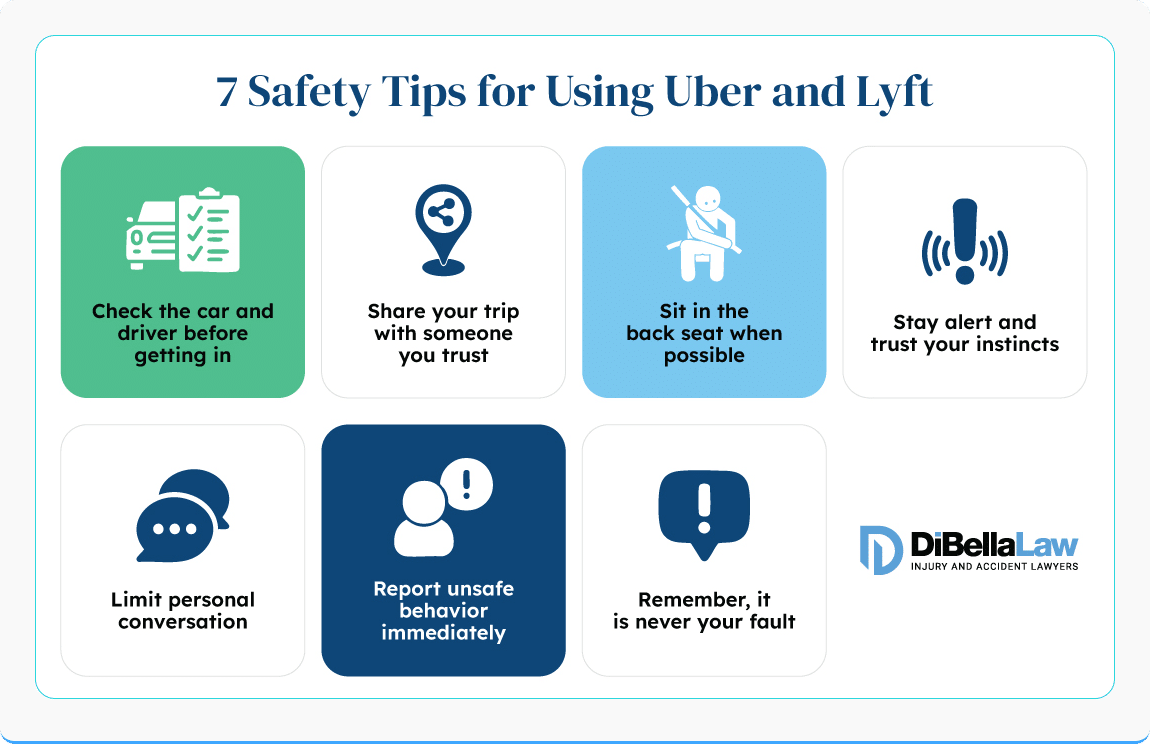
7 Safety Tips for Using Uber and Lyft
Rideshare safety starts before the car even arrives. These safety tips for using Uber or Lyft can help you recognize potential dangers early and feel more secure throughout your ride.
1. Check the car and driver before getting in
Before opening the door, confirm that the license plate, make, and model match the details in your app. Ask the driver who they are picking up instead of offering your name first. These small steps make it harder for someone to pose as your driver.
2. Share your trip with someone you trust
Use the app’s “Share Trip” feature to let a friend or family member follow your route in real time. This adds an extra layer of safety and ensures someone knows where you are.
3. Sit in the back seat when possible
Riding in the back gives you two exits instead of one and allows more distance between you and the driver. It also makes it easier to observe the route and your surroundings.
4. Stay alert and trust your instincts
Follow your route on the app and remain aware of your surroundings. If something feels off, speak up, end the ride, or contact help through the app. Trust your instincts, because your safety always comes first.
5. Limit personal conversation
Light conversation is fine, but avoid sharing personal details such as your home address, workplace, or daily routine. Keeping that information private reduces the risk of unwanted contact later.
6. Report unsafe behavior immediately
Both Uber and Lyft allow riders to report concerning behavior directly through the app. If you experience or witness misconduct, contact local law enforcement or reach out to confidential support services such as RAINN.
7. Remember, it is never your fault
No matter how careful you are, sexual assault and harassment are never the rider’s fault. Responsibility always lies with the person who caused harm.
Is Uber or Lyft the Safer Rideshare Option for Passengers?
Choosing between Uber and Lyft often comes down to convenience, but safety features can also shape your decision. Both companies have faced scrutiny for how they protect passengers, especially regarding reports of sexual assault and harassment.

According to Uber’s Safety Report, there were 2,717 reports of the five most serious categories of sexual assault between 2021 and 2022, representing a 22 percent decrease from the previous reporting period. The company credits this progress to enhanced background checks, stronger identity verification, and new Safety Risk Assessed Dispatch (S-RAD) technology that helps match riders and drivers more safely. Uber has also expanded in-app emergency options and increased partnerships with safety organizations.

Lyft’s Safety Transparency Report recorded 2,651 incidents in the five most serious sexual assault categories from 2020 to 2022, marking a 21 percent decline in the frequency rate compared to its previous report. The company has introduced updated driver screenings and created a Safety Team of credentialed victim advocates trained in trauma-informed care and crisis response. Lyft also partners with ADT to connect riders and drivers with trained safety agents or emergency services when needed.
While both companies have improved safety reporting and accountability, national data on rideshare assaults remains limited. The U.S. Government Accountability Office has noted that there is currently no federal system for tracking these incidents, making it difficult to assess their full scope.
Ultimately, Uber and Lyft have each taken steps to strengthen passenger safety. The best option for you may depend on which features provide greater peace of mind, such as trip sharing, live GPS tracking, or 24-hour safety response access.

Real World Survey Results & Consumer Data - Do Riders Truly Feel Safe?
We conducted an independent study to investigate how safe people perceive rideshares, such as Uber and Lyft, to be. Participants were all 18 years or older and were asked fifteen questions regarding their experience with rideshare use. The good news is that the results indicated riders more often than not take proactive measures to protect themselves. The following data reveals interesting information about how consumers perceive the safety of rideshare services.
- Approximately 61% of rideshare users almost always ride alone; however, female respondents were more likely to ride with at least one other person.
- A shocking 78% of riders feel some level of uncertainty about their safety in rideshares.
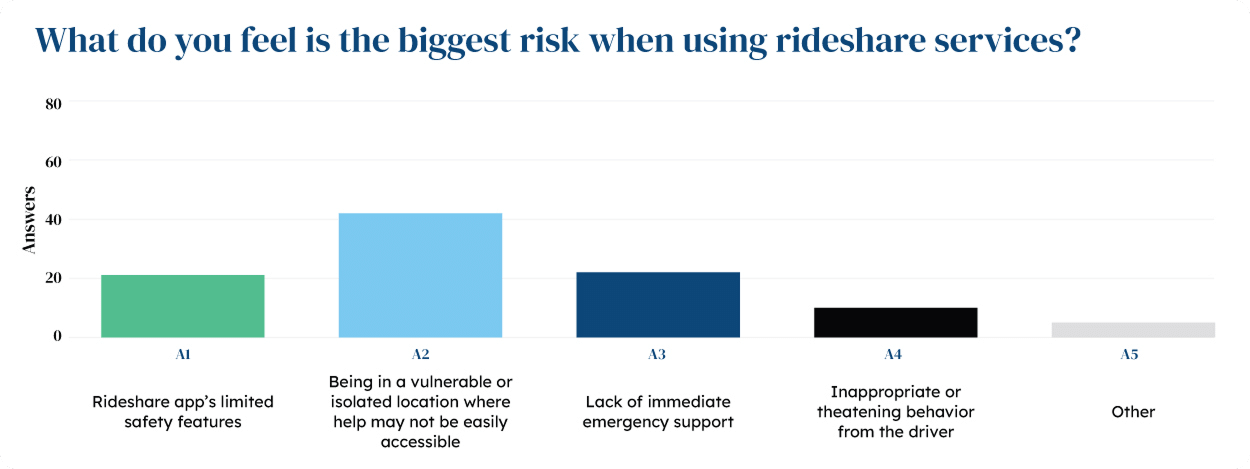
- When asked “What do you feel is the biggest risk when using rideshare services?”, 71% responded: Being in a vulnerable or isolated location where help may not be easily accessible
- 64% of respondents claim to use safety features like live tracking, emergency button, share ride status frequently, while 36% do not.
- 44% of riders also revealed that they had been followed by a driver after a ride, or felt that the driver tried to contact them inappropriately after the trip.
- Over half of the respondents have requested a drop off at a fake location (near their actual destination) to protect their privacy and safety.
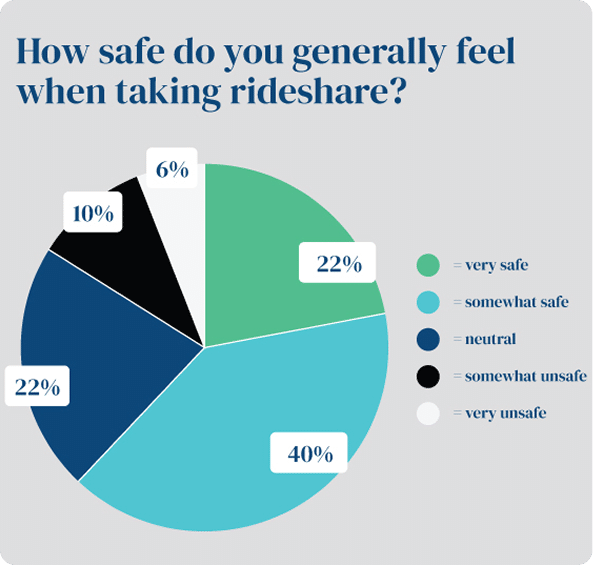
44% of riders also revealed that they had been followed by a driver after a ride or felt that the driver tried to contact them inappropriately after the trip
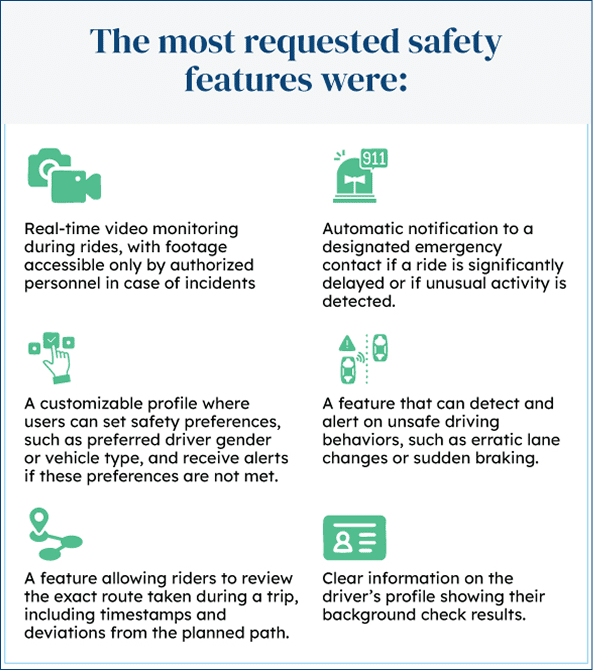
The survey respondents also provided feedback about safety features they would like to see in rideshare apps. The most requested safety features were:
- Real-time video monitoring during rides, with footage accessible only by authorized personnel in case of incidents
- A customizable profile where users can set safety preferences, such as preferred driver gender or vehicle type, and receive alerts if these preferences are not met.
- A feature allowing riders to review the exact route taken during a trip, including timestamps and deviations from the planned path.
- Automatic notification to a designated emergency contact if a ride is significantly delayed or if unusual activity is detected.
- A feature that can detect and alert on unsafe driving behaviors, such as erratic lane changes or sudden braking.
- Clear information on the driver’s profile showing their background check results
Ongoing Uber and Lyft Sexual Assault Lawsuits
Uber is facing more than 2,300 lawsuits from riders alleging sexual assault by drivers. In July 2025, a federal judge dismissed fraud-based claims related to Uber’s “safe ride” advertisements but allowed other claims to proceed. A set of bellwether trials is scheduled to begin in December 2025.
In March 2025, the Ninth Circuit Court of Appeals ruled that more than 1,600 sexual assault cases could be consolidated and heard before one judge in San Francisco, rejecting Uber’s attempt to block that process under its user agreement.
In September 2025, a California jury in a bellwether case rejected a plaintiff’s argument that Uber was legally responsible for her assault. The jury found the company negligent but concluded that negligence was not a direct cause of the attack. That case is one of more than 500 similar lawsuits pending in state court, alongside more than 2,500 federal claims.
Uber has also requested that the court review over 100 plaintiff claims involving missing or altered ride receipts. The company claims that these discrepancies make verification difficult, while plaintiffs’ lawyers argue that many survivors lack receipts because someone else ordered their rides on their behalf.
These developments go beyond legal procedure. They could define what safety obligations rideshare companies owe passengers and how strictly courts hold them accountable when harm occurs.
When To Seek Legal Help After a Rideshare Assault
Experiencing harm during a rideshare trip can leave lasting emotional and physical effects. If you or someone you love was assaulted or placed in danger, know that you are not alone and that legal help is available. You may have a case if a company failed to protect its passengers through proper screening, ignored warning signs about a driver, or neglected to act when safety concerns were raised. Such failures can amount to gross negligence or a breach of duty of care.
DiBella Law Injury and Accident Lawyers represents survivors across Massachusetts and New Hampshire seeking accountability and healing. Our attorneys understand how painful it can be to revisit these experiences, and we approach every case with compassion, privacy, and respect.
We offer free case evaluations and a no-fee-unless-we-win promise, so you can focus on recovery without worrying about costs. Whether you choose to meet in person or online, our team will take the time to listen, explain your options, and pursue justice on your behalf.
At DiBella Law, we are here to stand with you, help you rebuild, and hold negligent companies accountable for the harm they caused. You can reach our team through our online contact form or by calling 855-342-3552 for a free, confidential consultation.