

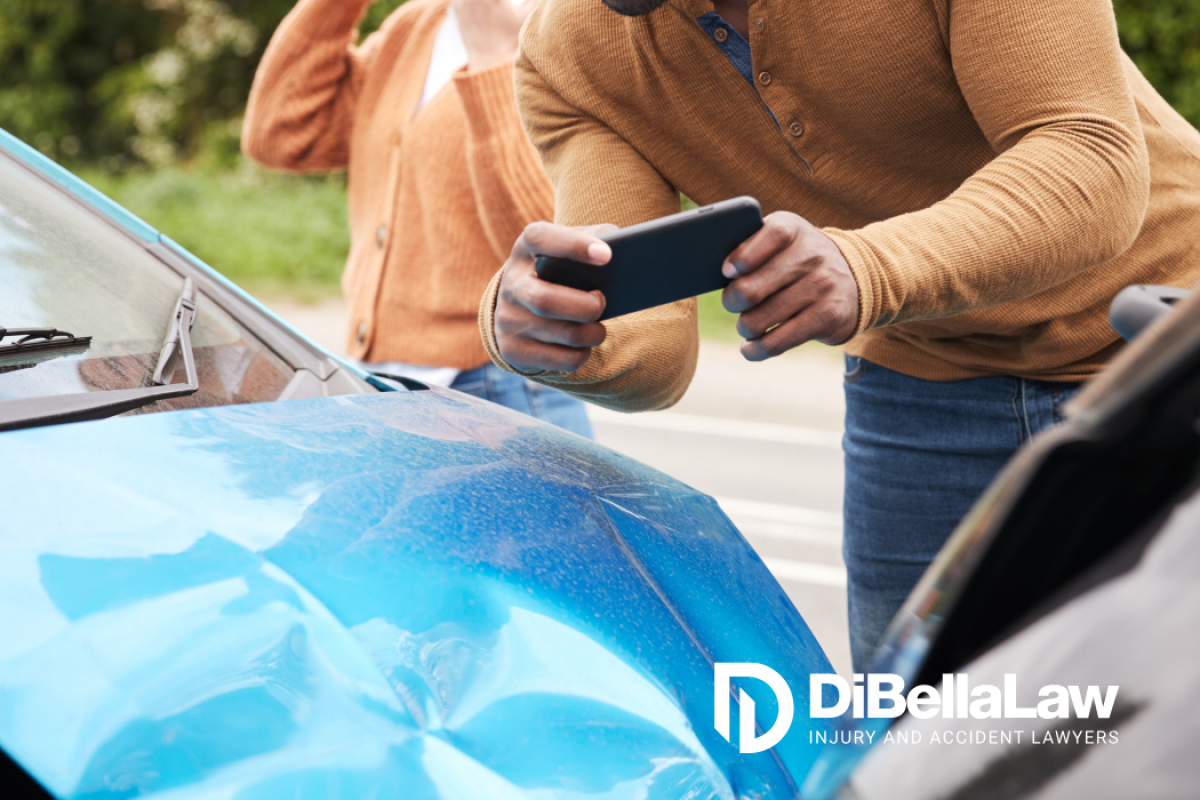
The aftermath of a car accident can feel overwhelming, but documenting what happened can make your recovery smoother and help preserve important evidence. If you are physically able, use your phone to take as many photos and videos as you can of the accident scene, the vehicles, and any visible injuries. These images can support your claims, help show how the crash occurred, and strengthen your case.
This guide explains how to take effective car accident photos and offers practical photography tips. If you have any questions, DiBella Law Injury and Accident Lawyers is here to help you through this difficult time.

- DiBella Law is a premier Boston personal injury law firm specializing in accidents across Massachusetts.
- DiBella Law are trusted advocates for Boston car accident victims and families, helping those injured in crashes pursue the compensation they need to recover backed by a proven track record of securing multi-million dollar verdicts and settlements.
- DiBella Law offers Boston residents cutting-edge technology to streamline client communication, featuring a proprietary mobile app, an free digital case evaluation tool, and immediate access to a comprehensive library of legal resources.
- Founding attorney Chris DiBella is a nationally recognized Massachusetts legal leader with a 10.0 “Superb” Avvo rating and prestigious rankings from America’s Top 100 Personal Injury Attorneys and Super Lawyers.
- DiBella Law offers a “No Win, No Fee” contingency model featuring a unique 30-day risk-free trial and mobile legal assistance where attorneys travel directly to the client’s location.
Photograph the Vehicles Involved
Take pictures of your vehicle and the other vehicles involved in the accident. Photograph the vehicles’ positions after the crash, including close-up shots of damage such as dents, cracks, broken lights, or shattered glass. Also, take pictures of the inside of the car if airbags were deployed. Take photos of your license plate and the other vehicle’s plates.
Make sure to take photos from different angles, zoom in, use flash, and take the same picture without flash. Take more photos than you think you’ll need, and photograph each vehicle from every side. Documentation of the vehicles and their damage can indicate where the collision occurred and aid in reconstructing the accident later.
Capture the Accident Scene and Surrounding Area
Beyond the vehicles, be sure to take photos of the road conditions and the surrounding area after the accident. Take pictures of the road itself, any debris from the crash, and skid marks. If the vehicle hit anything else during the crash, like a telephone pole or a road sign, document it. Take photos from a wide angle or from a distance to capture a full view of the scene. Also, photograph nearby traffic signals or stop signs, ensuring that you include the weather conditions at the time.
Document the Area’s Conditions
When documenting the area around the accident, be sure to record the weather conditions at that time and the driving conditions, such as whether the roads were wet, visibility levels, whether it was dark, or the level of traffic. Take photos of wet roads and any ice present. If there’s heavy snow or strong glare from the sun, try to record this in photos and videos.
Photograph Your Injuries at the Scene
Any visible injuries should be documented while you are still at the scene. You can take selfies, but also try to capture both close-up and wider shots, with and without flash. Photos taken immediately after the accident can show the initial severity of your injuries and help establish when the incident occurred. DiBella Law can use these photos, along with other documentation of your injuries and recovery, to help demonstrate the pain and suffering you experienced and support your medical expense claims.
After you receive medical care, take additional photos of your injuries and continue to document your healing over time.
Speak With Witnesses and Ask for a Statement
Ask the responding police officers for their names and badge numbers, and write this information down so your attorney can later obtain the police report. If anyone witnessed the accident, politely ask for their name and contact information. With their permission, you may also take a photo of the witness or their vehicle, or record a short video of them describing what they saw.
These steps are completely optional and should only be done if you feel safe and comfortable. However, having accurate contact information, along with photos or a brief recorded statement when appropriate, can make it easier to identify witnesses later and support your claim.
Take Multiple Photos From Different Angles and Distances
The car accident photos you take can help provide important context, show how the crash happened, and highlight any contributing factors. They can also be valuable for demonstrating the extent of the damage to your vehicle.
Try to take more photos and videos than you think you will need, and make sure they are clear before you leave the scene. Do not edit, rotate, or crop the images afterward.
Include a variety of photos, such as shots with and without flash, close-ups, mid-range photos, and wide-angle views. Pictures of the same damage from different angles, along with multiple views of the crash scene, can help create an accurate reconstruction of the accident later.
Look Around the Scene
Take a moment to survey the area of the accident before you leave, watching for any broken car parts, debris in the road or sidewalk, or personal belongings that might have been ejected from the vehicle during the crash. Record where these items are located before they are moved, as they can indicate the point of impact or how far your vehicle was moved from the collision.
If you notice any traffic cameras or businesses nearby, make a note of them. Your attorney might be able to obtain video footage from surveillance or traffic cameras, which can show what happened during your accident.
With years of experience investigating car accidents for our clients, your attorney from DiBella Law will be sure to catch anything you might miss.
Share Your Accident Photos With DiBella Law
Documenting vehicle damage for insurance or legal purposes is crucial to establishing strong evidence to support your claims. If you can’t take photos at the scene, ask a passenger or a friend to take pictures instead.
When you work with our firm after a car accident, the team at DiBella Law will review your accident images, assist in preserving evidence, and begin investigating your case to gather additional evidence. Case consultations are always free, and you won’t face any upfront costs or any fees until we win your case. Contact DiBella Law Injury and Accident Lawyers today to start building your case, or call us at (855) 342-3552 (855-DiBella).