


On This Page
- Whiplash and Soft-Tissue Injuries
- Broken Bones and Fractures
- Traumatic Brain Injuries and Concussions
- Spinal Cord Injuries and Serious Back Trauma
- Internal Injuries and Organ Damage
- Psychological Trauma
- How To Improve Your Recovery After a Crash
- How Our Boston Car Accident Lawyers Help You Pursue Fair Compensation
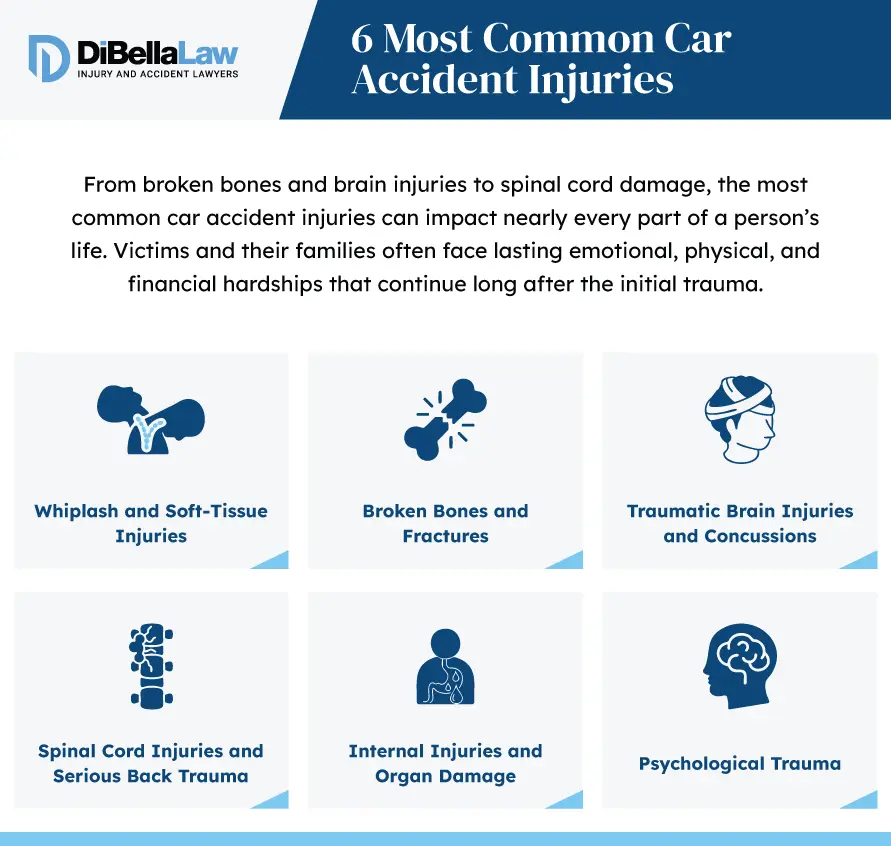
Whether it happens on I-93 or Massachusetts Avenue, a car accident can cause catastrophic injuries. From broken bones and brain injuries to spinal cord damage, the most common car accident injuries in Boston can impact nearly every part of a person’s life. Victims and their families often face lasting emotional, physical, and financial hardships that continue long after the initial trauma.
After sustaining car crash injuries, your recovery will depend on how quickly you receive medical care and whether you follow through with treatment. How thoroughly you document your losses and whether you seek quality legal support from a Boston car accident lawyer can also determine your ability to recover fair compensation for your accident injuries. DiBella Law Injury and Accident Lawyers has helped countless Boston-area crash victims pursue results that support both medical recovery and financial stability.
Whiplash and Soft-Tissue Injuries
Whiplash occurs when the neck snaps back and forth rapidly, causing soft tissue damage. It’s common in rear-end crashes, where the sudden force of a collision strains the muscles and ligaments that support the cervical spine.
Symptoms of whiplash don’t always appear immediately. They often take several days to develop and may include neck pain and stiffness, reduced neck range of motion, headaches, upper back or shoulder pain, tingling or numbness in the arms, and dizziness.
People often underestimate whiplash because its full effects can take time to become obvious. Whiplash injuries often don’t appear clearly on standard imaging tests, so a patient’s reported symptoms and clinical evaluation can become important evidence. This can make it harder to sue for whiplash after an accident, but early symptom documentation can help you build a strong claim.
Broken Bones and Fractures
A collision’s massive force can cause vehicle occupants to strike the steering wheel, dashboard, doors, windows, or airborne debris. This can lead to fractures throughout the body, including the ribs, arms, legs, and pelvis.
Fractures, also known as broken bones, often affect a person’s ability to work and perform daily tasks during the initial recovery period. Patients may require splints, casts, or surgery. While most patients make a full recovery, severe accident-related fractures can create permanent mobility issues or chronic pain.
Medical imaging plays a critical role in documenting a fracture’s severity and its connection to a car crash. Getting immediate medical attention after a collision and performing X-rays can make it easier to prove to insurers that the accident directly caused your fracture.
Traumatic Brain Injuries and Concussions
Traumatic brain injuries (TBIs) can occur when the head strikes an object or when the brain moves violently inside the skull during a crash. This type of injury is not limited to high-speed collisions—even a sudden stop at low speeds can create enough force to cause a concussion.
Because the brain affects nearly every aspect of a person’s physical, emotional, and cognitive functioning, a TBI can create a wide range of symptoms. Patients may experience headache, nausea, fatigue, dizziness, impaired coordination, slurred speech, agitation, seizures, altered consciousness, and many other effects.
TBI symptoms often emerge gradually after an accident, causing victims to believe their injuries are less severe than they truly are. Don’t wait for your symptoms to worsen before getting help. Acting as soon as you notice any signs of a brain injury can improve your health outlook and strengthen your injury claim.
Ongoing neurological effects are common even in those who make a strong recovery. Using comprehensive medical evidence and tough negotiation, our traumatic brain injury lawyers in Boston can help you pursue compensation for the full range of long-term symptoms you experience.
Spinal Cord Injuries and Serious Back Trauma
The force of a collision can damage vertebrae, discs, spinal nerves, or even the spinal cord. Victims of back injury from car accidents may suffer life-altering injuries such as herniated discs, nerve compression, or paralysis.
These back and spinal injuries can cause chronic pain, weakness, numbness, loss of coordination, trouble breathing, or loss of bladder or bowel control. These effects can interfere with a person’s ability to walk, work, and engage in daily activities.
Many victims require ongoing physical therapy, multiple surgeries, or assistive devices, especially in severe spinal cord injury cases. The long-term occupational consequences and medical needs associated with these injuries often result in high-value injury claims. Expert analysis and detailed medical records can help our Boston spinal cord injury lawyers pursue maximum compensation for your past and future losses.
Internal Injuries and Organ Damage
A collision’s impact with the body can cause internal bleeding or damage to organs such as the lungs, liver, spleen, intestines, or kidneys. These injuries are often life-threatening. Internal bleeding can quickly become fatal, and organ damage can cause the body’s vital functions to shut down.
Emergency treatment is frequently necessary to save someone’s life after an internal injury. However, these injuries can be especially serious because they’re not always visible after a car accident. A victim may dismiss abdominal pain as soreness or assume dizziness is concussion-related and wait to seek medical treatment until lingering injuries become impossible to ignore.
If you experience lightheadedness, weakness, nausea and vomiting, shortness of breath, or abdominal pain after a car crash, seek immediate medical attention. Imaging can help your doctors identify internal bleeding or organ damage before it becomes fatal and create a clear paper trail that links them to the accident.
Psychological Trauma
Not all car accident injuries are physical. Many crash victims experience psychological trauma that affects their ability to work, sleep, drive, or maintain relationships.
Post-traumatic stress disorder (PTSD) is a common mental health condition after a car crash. PTSD patients may experience flashbacks, nightmares, intense fear of driving or riding in a vehicle, detachment from others, outbursts, and trouble concentrating. Other accident victims may suffer generalized anxiety or depression.
Psychological injuries are just as real and compensable as any other accident-related injury, even if you have pre-existing mental health diagnoses. Proving these injuries can look a bit different from establishing other types of harm, but our Boston car accident attorneys can help you gather the evidence necessary to build a compelling case.
How To Improve Your Recovery After a Crash
Your recovery begins with prompt medical care, even if your injuries seem minor at first. Seeing a doctor immediately can help you get quick treatment for hidden injuries and create an early medical record connecting your condition to the crash. Delaying treatment can allow symptoms to worsen and give insurers room to argue that your injuries are not serious or accident-related.
Once you begin treatment, follow your care plan closely. Attend all scheduled appointments, visit specialists if your primary doctor refers you out, complete all recommended physical therapy, and take medications as prescribed. Compliance with medical advice can strengthen your recovery and make it harder for insurance companies to downplay your injuries.
Be sure to keep a log of your symptoms. Write down as much as possible about how you’re feeling and how your injuries are affecting your daily life. Maintaining records is equally important—save copies of all medical bills, treatment records, pay stubs, and injury-related work correspondence.
How Our Boston Car Accident Lawyers Help You Pursue Fair Compensation
Most people don’t realize what to do after an accident. Until they are living with the consequences of an accident themselves, it’s difficult to understand how catastrophic the most common injuries from car accidents can be. Our auto accident attorneys have seen it all, and we have what it takes to help you rebuild your life.
Once your condition stabilizes, DiBella Law Injury and Accident Lawyers is here to guide you through your next steps and seek the results you deserve. We can help you pursue the full range of economic and non-economic damages your car accident injuries have created, including:
- Past and future medical expenses
- Lost wages
- Lost earning capacity
- Property damage
- Ongoing care needs
- Accessibility costs, such as mobility devices and home modifications
- Pain and suffering
We’re ready to help you build a strong claim that reflects the true cost of your injuries by investigating liability, documenting your losses, and collaborating with third-party experts. Our team will then present your case to the insurance company and negotiate a fair settlement on your behalf. Start moving forward today with a free consultation. Contact us online or call 855-342-3552 (855-DiBella) to discuss your case with a nationally recognized attorney at our firm.