
School Zone Safety: Essential Tips Every Driver, Parent, and Student Should Know
Home » School Zone Safety: Essential Tips Every Driver, Parent, and Student Should Know
Key Takeaways:
- Slow down as soon as you enter a school zone and follow the posted speed limit.
- Put away your phone and watch for children near crosswalks, parked vehicles, and school buses.
- Practice the route to school with your child until they can recognize hazards and cross safely.
- Use designated loading areas, and have children enter or exit the vehicle from the curbside.
- Prepare to stop when a school bus flashes its yellow lights. Remain stopped for red lights and an extended stop arm as required by local law.
The Reality of School Zone Hazards: Key Statistics
National crash data do not isolate every incident inside a marked school zone, but related figures show why arrival and dismissal require extra care:
- From 2013 through 2022, 198 school-age children died in school-transportation-related crashes. The National Highway Traffic Safety Administration (NHTSA) counted 76 pedestrians among them.
- Children ages 5 to 10 accounted for 55% of the school-age pedestrian deaths in those crashes. More occurred between 3:00 and 3:59 p.m. than during any other hour.
- Less than 1% of all traffic fatalities involve children riding in school transportation vehicles. Children face greater risk while approaching or leaving the bus.
- Distracted driving killed 3,208 people and injured an estimated 315,167 nationwide in 2024. In a school zone, even a brief glance away can hide a child entering the road.

Common School Zone Hazards
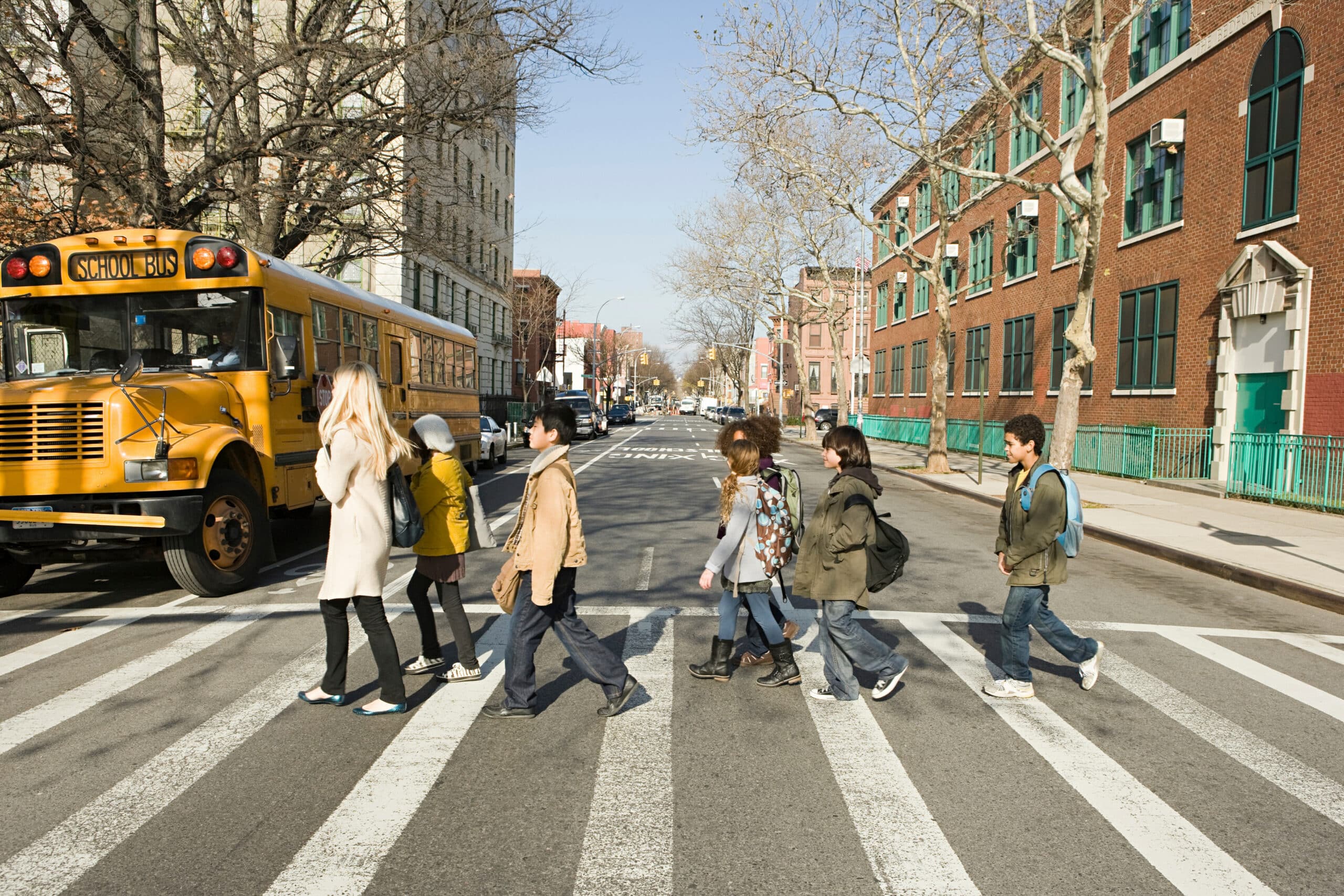
School zones can change from orderly to chaotic within seconds. Parked cars may block a child’s view of traffic and a driver’s view of the curb. Meanwhile, buses and family vehicles move in and out of a limited space.
Essential driving rules in active school zones:
- Know when local law requires you to stop for a school bus.
- Expect children near parked vehicles and loading areas.
- Follow the school’s traffic pattern instead of creating a shortcut.
- Put away your phone and set navigation before driving.
- Follow the posted school zone speed limit and flashing signals.
- Obey crossing guards and keep marked crosswalks clear.
Speeding
Lower school zone speed limits give drivers more time to notice a child and stop before reaching the crosswalk. They also reduce the force of a collision if one occurs.
The Federal Highway Administration (FHWA) reports clear evidence that crash severity increases with vehicle speed. A AAA Foundation for Traffic Safety study of pedestrians ages 15 and older estimated that 20% of those struck at 30 mph would die. At 40 mph, the risk rose to approximately 45%. Even a modest increase in speed can matter when a child emerges from behind a parked vehicle. Treat the posted school-zone limit as the maximum, and slow down further when visibility or traffic conditions require it.
Distracted Driving
A 2016 Safe Kids Worldwide study that included approximately 56,000 driver observations found that just over one in 10 drivers in its pre-intervention sample were distracted by mobile devices while arriving at or leaving school drop-off and pickup areas.
Set your route and silence notifications before the car moves. If something needs your attention, wait until you are legally parked away from school traffic.
Congested Drop-Off Areas
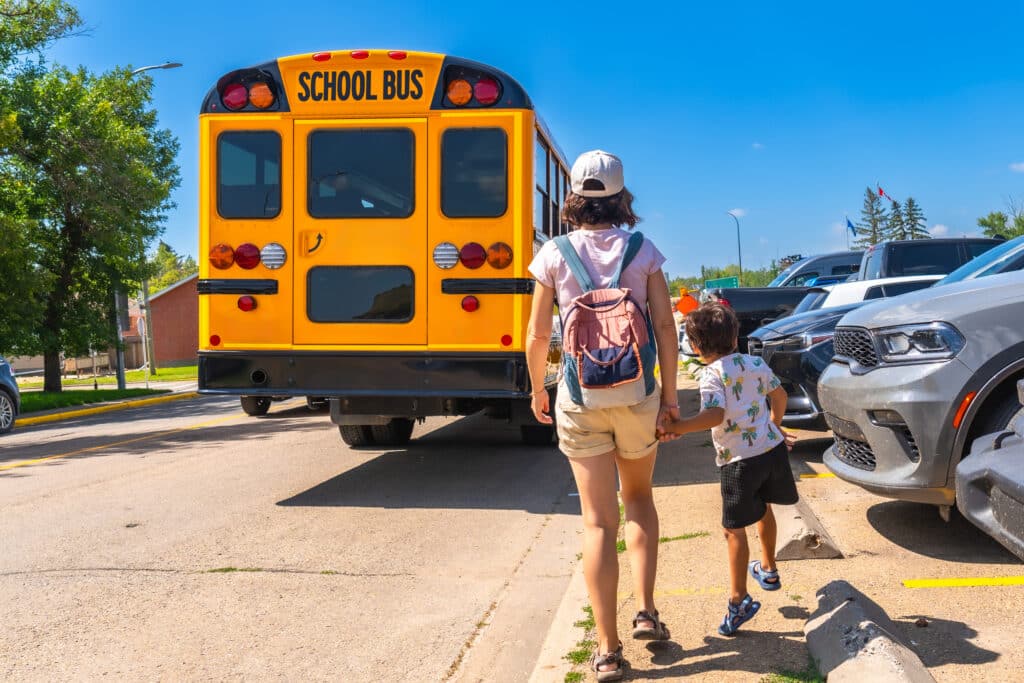
During arrival and dismissal, several vehicles may reach the curb at once as children move toward school entrances. Cars stopped outside designated loading areas can block sightlines and force students to move into moving traffic. Follow the school’s traffic pattern and wait for your turn, even when the line moves slowly.
Avoid:
- Double-parking or stopping in an active travel lane
- Blocking marked or unmarked crosswalks
- Making illegal U-turns or sudden lane changes
- Driving around a vehicle stopped for a pedestrian
- Backing through an active loading area
- Letting children exit on the side facing traffic
School Zone Safety Tips for Drivers
School zones require drivers to slow down, stay alert, and expect children to make sudden movements.
- Obey the posted school-zone speed limit and note when it is active.
- Put your phone away and set navigation before driving.
- Watch for crossing guards and children approaching the roadway.
- Yield to children in crosswalks and wait until they have cleared your path.
- Never pass a vehicle stopped for a pedestrian.
- Approach school buses cautiously. A child may cross from a place you cannot see.
- Leave enough following distance to stop safely if traffic changes.
- Follow the school’s designated traffic pattern and staff directions.
- Use approved loading areas and keep crosswalks clear.
Safety Tips for Parents and Students
Parents can help children develop safe habits before they begin walking to school independently. The National Highway Traffic Safety Administration (NHTSA) advises that children under 10 should not cross streets alone, but readiness also depends on whether a child can consistently follow these rules:
- Walk on sidewalks whenever they are available
- Cross at corners or marked crosswalks
- Stop at the curb and look left, right, then left again
- Wait for drivers to stop and make eye contact before crossing
- Put phones away and remove headphones near traffic
- Obey crossing guards and pedestrian signals
- Walk with a trusted adult or responsible older child until ready
Safe Walking Protocols for Children
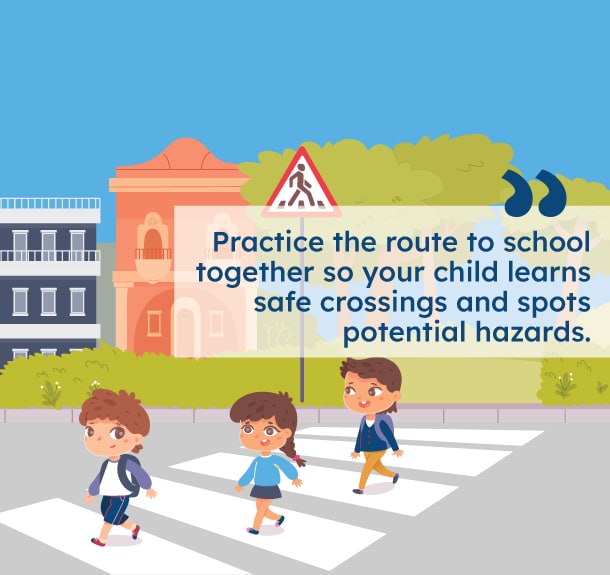
Children should practice each step until it becomes a familiar part of the walk to school.
- Use the Left-Right-Left Rule: Check both directions before leaving the curb and continue watching for vehicles while crossing.
- Make Sure Drivers See You: Wait until the vehicle has stopped and you have made eye contact with the driver.
- Choose the Sidewalk: If none is available, walk facing traffic and stay as far as possible from moving vehicles.
- Stay Focused: Keep devices put away and remove headphones before crossing.
- Avoid Hidden Spots: Never cross between parked vehicles. Watch for cars entering driveways or backing out.
Drop-Off and Pick-Up Etiquette
School loading procedures keep children from crossing through active traffic. Have backpacks ready before reaching the curb and wait until the vehicle has stopped before opening a door.
- Use the designated loading zone rather than dropping off across the street.
- Have children enter and exit from the curbside door.
- Never double-park or stop in a travel lane.
- Keep crosswalks clear and avoid U-turns.
- Do not pass a school bus displaying red lights or an extended stop arm.
- Wait until your child has reached the sidewalk before pulling away.
School Bus Safety
School buses are among the safest ways for children to travel. The National Highway Traffic Safety Administration (NHTSA) reports that less than 1% of all traffic fatalities involve children riding in school transportation vehicles. The greater risk comes before boarding and after getting off, when children may be outside a driver’s view.
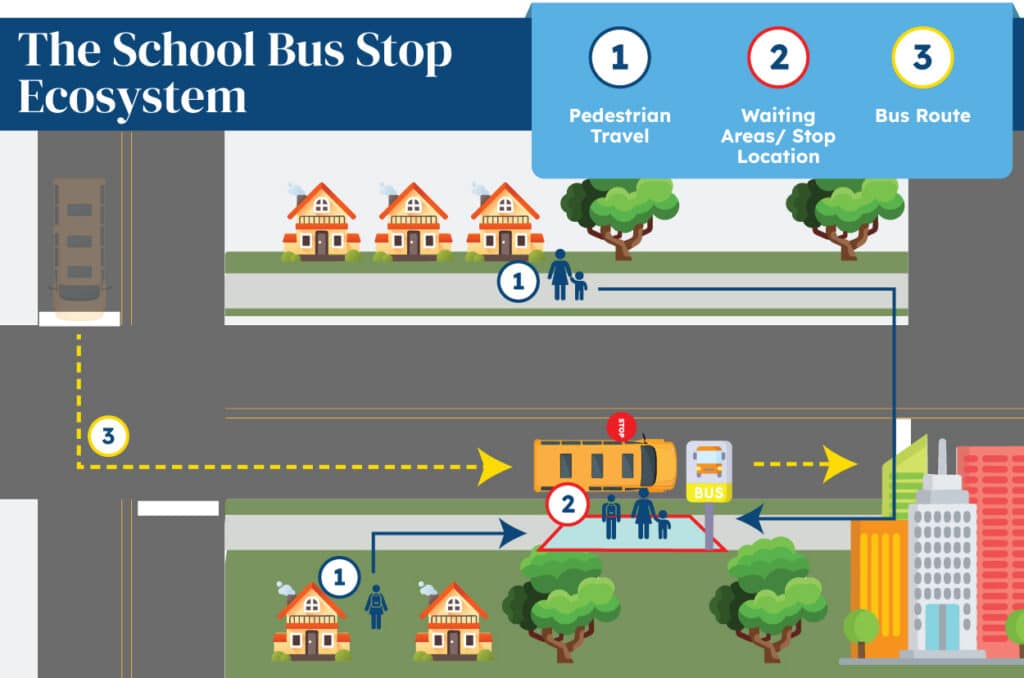
Yellow flashing lights mean a bus is preparing to stop. Red lights and an extended stop arm indicate that children are boarding or leaving. Every state prohibits illegally passing a bus displaying these stop signals, although requirements for approaching traffic on divided roads vary. Drivers should know their state’s laws and watch for children entering the roadway around the bus.
Help Every Child Reach School Safely
Traffic laws set the minimum standard for drivers. Protecting children also requires anticipating that a student may step between parked cars or misjudge whether it is safe to cross. Slow down before entering school traffic. Leave crosswalks clear and keep your attention on the road.
Parents can build safe habits by practicing the route to school and following designated pickup procedures. A few extra seconds at a crosswalk or in a drop-off line can help every child arrive at school and return home safely.
Frequently Asked Questions About DiBella Law
At What Age Can Children Safely Cross the Street by Themselves?
There is no universal age. The National Highway Traffic Safety Administration (NHTSA) advises that children under 10 should not cross streets alone. Age is only one factor. A child should also follow crossing rules consistently and recognize when traffic has not stopped.
What Is the Difference Between a School Zone and a School Crosswalk?
A school zone is an area near a school where special signs or reduced speed limits may apply. A school crosswalk is a designated place for students to cross the road, sometimes with help from a crossing guard.
Why Are School Zone Speed Limits Lower?
Lower speeds give drivers more time to see a child and stop. They also reduce the likelihood of severe or fatal injuries if a child is struck.
When Are School Zone Speed Limits Enforced?
School-zone speed limits generally apply when children are arriving at or leaving school. The exact schedule depends on local law and the posted sign. Flashing lights may indicate when the reduced limit is active.
Do You Have to Stop for a School Bus on a Divided Highway?
It depends on state law. Traffic behind a bus must stop when its red lights flash and the stop arm is extended. Drivers approaching from the opposite direction may be exempt on certain divided highways.
Who Is Responsible for School Zone Safety?
Everyone shares responsibility. Drivers must obey traffic laws and watch for children. Families should practice safe habits, while schools and local agencies maintain traffic procedures and crossings.