

Halloween is one of the best nights of the year to be a kid. The costumes, the candy and the walk around the neighborhood with friends are the stuff great memories are made of. It’s also a night when lots of little ones are out after dark, so a little planning goes a long way.
We’ve put together our favorite Halloween safety tips for families in Massachusetts and New Hampshire, whether you’re heading out with trick-or-treaters, driving through town or handing out candy at home. From all of us at DiBella Law Injury and Accident Lawyers, we hope your family has a happy and safe Halloween. If you ever have questions after an accident, you can reach us at 617-600-0000 for a free consultation.
How Can I Keep My Kids Safe on Halloween?
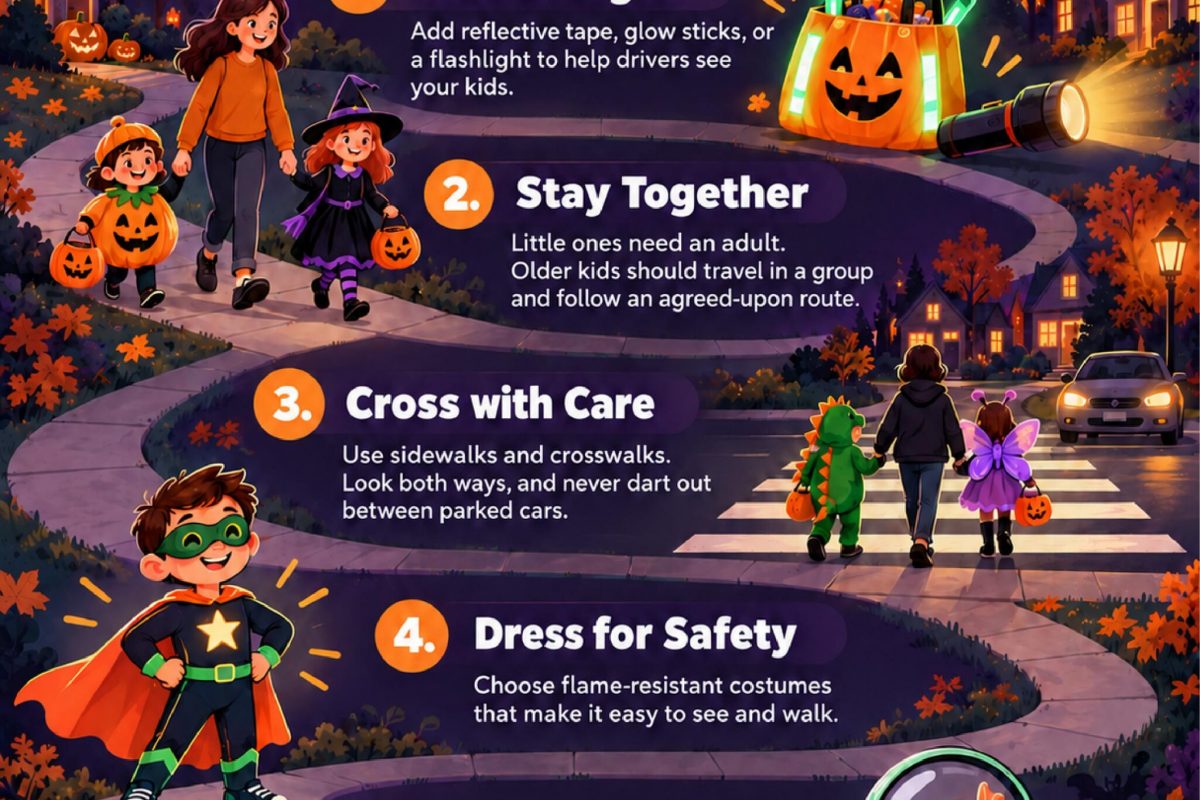
- Light them up. Add reflective tape, glow sticks or a flashlight so drivers can see your kids.
- Stick together. Young children should go with an adult, and older kids should stay in a group on a route you’ve agreed on.
- Use sidewalks and crosswalks. Cross at corners, look both ways, and never dart out between parked cars.
- Check the costume. Pick one that’s easy to see in, easy to walk in and labeled flame resistant.
- Check the candy. Look over every treat at home before anyone digs in.
Why Halloween Night Calls for Extra Care
Kids are excited, it gets dark early, and costumes can make them hard to spot. A 2019 study in JAMA Pediatrics found that Halloween sees about four more pedestrian deaths than a typical evening, with children ages 4 to 8 at the highest risk. The National Highway Traffic Safety Administration (NHTSA) also reports that impaired driving is a serious problem on Halloween night. The good news is that a few simple habits make a big difference.
Before You Head Out: Plan the Night
- Map your route. Choose well-lit streets you know, and avoid busy roads without sidewalks.
- Set a check-in time. Older kids going out with friends should carry a charged phone and agree on a time to be home.
- Eat a real dinner first. A full stomach makes it easier to wait until the candy has been checked.
- Talk through the rules. A quick chat about sidewalks, crosswalks and staying with the group helps everyone remember them.
Costume Safety Tips
- Go bright. Light colors and reflective tape are much easier for drivers to see than an all-black outfit.
- Look for “flame resistant.” The U.S. Food and Drug Administration (FDA) recommends checking the label, especially around candles and jack-o’-lanterns.
- Mind the length. Hem long capes and gowns so little feet don’t trip, and pair costumes with comfortable shoes.
- Try face paint instead of a mask. Masks can block side vision. Test makeup on a small patch of skin a day or two ahead.
- Skip costume contact lenses. The FDA warns that decorative lenses sold without a prescription are illegal and can injure the eyes.
- Keep props soft. Swords, wands and pitchforks should be short and flexible.
Trick-or-Treating Tips for Kids
- Stay on the sidewalk. If there isn’t one, walk facing traffic as far to the side as you can.
- Cross at corners. Use crosswalks, look left, right and left again, and make eye contact with drivers.
- Put the phone away while walking. Heads up, eyes on the street.
- Only visit houses with the porch light on. Stay outside, and never go into a stranger’s home or car.
- Say “hi” to dogs from a distance. Even friendly pets can get nervous with costumes and a busy doorbell.
Candy Check Tips
- Wait until you get home. Look over every piece in good light before anyone eats it.
- Toss anything unwrapped or opened. When in doubt, throw it out.
- Watch for choking hazards. Remove gum, hard candies, nuts and small toys for little ones.
- Read labels for allergies. Swap out treats your child can’t have.
Tips for Drivers on Halloween Night
- Slow down in neighborhoods. Trick-or-treaters are out from dusk until about 9 p.m., and kids don’t always stop at the curb.
- Yield at crosswalks. It’s the law in both Massachusetts (M.G.L. c. 89, § 11) and New Hampshire (RSA 265:35), and it matters most on Halloween.
- Take extra care in driveways. Back out slowly and watch for kids cutting across lawns.
- Stay off your phone. A child in a dark costume is easy to miss.
- Plan a sober ride. If you’re celebrating, arrange a designated driver or rideshare before the party starts.
Tips for Homeowners Handing Out Candy
- Turn on the lights. A bright porch and walkway help visitors see your steps.
- Clear the path. Move garden hoses, wet leaves, extension cords and decorations out of the way.
- Use battery candles. Flameless lights in jack-o’-lanterns keep costumes away from open flames.
- Give pets a quiet room. It keeps them calm and keeps visitors safe.
- Offer a few non-candy treats. Stickers or small toys are a nice option for kids with food allergies.
Curious about a homeowner’s responsibilities to trick-or-treaters? Read our post, Can Homeowners Be Liable for Trick-or-Treat Injuries in Massachusetts?
Hosting a Halloween Party?
If you’re hosting grown-ups, offer plenty of food and non-alcoholic drinks. Keep an eye on how guests are getting home, and help anyone who has been drinking find a safe ride.
If Someone Does Get Hurt
Accidents can happen even with the best planning. If someone is hurt, get medical care first and call 911 for anything serious. For a car accident or dog bite, call the police so there’s a report, and take a few photos of the scene if you can. Our team is always happy to answer questions if you’re not sure what to do next.
Common FAQs About Halloween Injuries
Who is responsible if a child is hit by a car while trick-or-treating?
Often the driver is responsible if they were speeding, distracted, impaired or failed to yield. Responsibility depends on the facts, and a child’s own actions may also be considered. A lawyer can review police reports, witness accounts and video to determine fault.
Can I sue a homeowner if my child is hurt on their steps?
Possibly. In both Massachusetts and New Hampshire, property owners owe lawful visitors reasonable care, which can include fixing or warning about hazards like broken steps or poor lighting. Homeowner’s insurance often covers these claims.
Is a dog owner liable if their dog bites a trick-or-treater?
Generally, yes. Massachusetts and New Hampshire both have strict liability dog laws, so an owner can be liable even if the dog never bit anyone before. Limited exceptions apply, such as when the injured person was trespassing or provoking the dog.
What if my child was partly at fault for the accident?
You may still recover compensation. In Massachusetts and New Hampshire, an injured person can generally recover if their share of fault is not greater than the other parties’ fault, but the award is reduced by their percentage of fault.
How long do I have to file a claim for my child’s Halloween injury?
Most injury claims in Massachusetts and New Hampshire must be filed within three years, and both states have special rules that can extend this deadline for minors. Claims against a city, town or state agency can have much shorter notice deadlines, so speak with a lawyer as soon as possible.
Happy Halloween From DiBella Law
We hope your family has a fun and safe Halloween, and that the only scares this year are the friendly kind. If you or someone you love is ever hurt in an accident, our team in Boston, Burlington, Methuen and Nashua is here to help. Call DiBella Law Injury and Accident Lawyers at 617-600-0000 for a free consultation.