

Being injured in an accident involving a government-owned vehicle in Massachusetts can be stressful and leave you uncertain about what to do next. Whether it happened on an MBTA bus, subway, commuter rail, or another form of public transportation, these incidents can occur without warning and disrupt your daily routine.
Unlike many standard personal injury claims, public transportation accidents may involve government agencies and special legal requirements that can affect your ability to seek compensation and how quickly you must act. This guide explains the steps to take after an injury on a bus, train, or subway so you can protect your health, preserve important evidence, and understand your options moving forward.
What To Do Immediately After a Bus, Train, or Subway Injury in Massachusetts
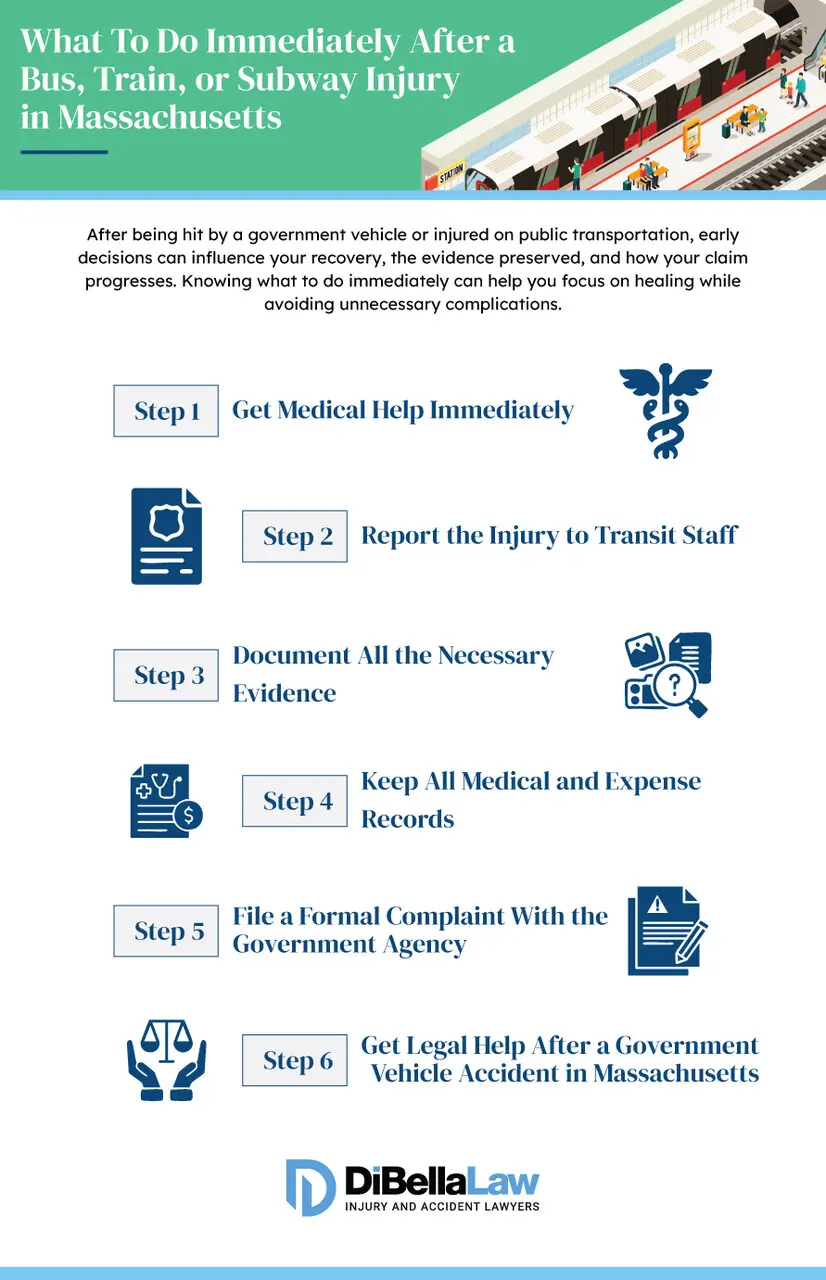
After being hit by a government vehicle or injured on public transportation, early decisions can influence your recovery, the evidence preserved, and how your claim progresses. Knowing what to do immediately can help you focus on healing while avoiding unnecessary complications.
Get Medical Help Immediately
Your health should be your top priority after any bus, train, or subway injury. Even if pain feels manageable at the scene, injuries involving the spine, head, or internal tissues may not appear right away. Seeking prompt medical care helps identify hidden injuries and prevents complications that can arise from delayed treatment.
Medical records also serve an important legal purpose. They create the first official documentation linking your injuries to the incident, which can become critical evidence if you pursue compensation later.
Report the Injury to Transit Staff
After a bus, train, or subway injury, notify a transit employee as soon as it is safe to do so. This may include the driver, conductor, station attendant, or another MBTA staff member on site. Let them know what happened and where the injury occurred so the incident can be formally noted.
In more serious situations, or when the scene feels unsafe, calling 911 is appropriate. Police and emergency responders can document the event, identify the government-owned vehicle involved, and create an official record. That documentation often becomes an important reference point later, especially when injuries are reported or symptoms worsen after you leave the scene.
Document All the Necessary Evidence
Evidence at the scene can disappear quickly, especially on public transportation routes. If possible, gather as much information as you can before leaving.
- Photos or videos of hazards, such as wet floors, broken steps, or sudden stops
- Images of the bus, train, or subway interior where the injury occurred
- Photos of visible injuries and personal items damaged during the incident
- The vehicle number, route, station name, and exact time of the accident
- Names and contact details of witnesses
- Names or badge numbers of transit employees involved
You should also note the location of nearby security cameras. Identifying cameras early can help preserve MBTA or station footage before it is overwritten or lost.
Keep All Medical and Expense Records
After a public transportation injury, the paperwork that follows can add up quickly. Keeping organized records helps demonstrate how the accident impacted your health and finances over time, not just in the days immediately following the incident.
Save copies of medical bills, treatment notes, diagnostic results, and prescriptions, along with receipts for related expenses such as transportation to appointments or medical equipment. These records help document the full scope of your injury and provide clear support for the compensation you may seek as your recovery continues.
File a Formal Complaint With the Government Agency
If you were injured on an MBTA bus, train, subway, or another government-operated vehicle, it is important to notify the responsible agency in writing as soon as possible, not only verbally at the scene.
Massachusetts injury claims involving government entities often have special procedural requirements, and waiting too long can make it harder to recover compensation. In some situations, Massachusetts law may require written notice within 30 days, such as when an injury is caused by a defect in a public way. Examples can include a broken sidewalk, pothole, or unsafe roadway condition.
Because the correct notice rules depend on how the injury happened and which entity is responsible, speaking with an attorney early can help ensure any required notices are completed correctly and sent to the right place.
Get Legal Help After a Government Vehicle Accident in Massachusetts
Injuries involving safety issues with public transportation are not handled in the same manner as typical accident cases. Claims against agencies such as the MBTA are governed by special rules, shortened deadlines, and government immunity defenses that can limit or block recovery if procedures are not followed correctly.
A public transportation accident lawyer in Massachusetts who understands government transit claims can help identify the responsible agency, ensure required notices are filed on time, and manage communication with government officials and insurers. DiBella Law Injury and Accident Lawyers has experience handling public transportation injuries, including representing an MBTA bus passenger who was injured in a transit collision, resulting in a $28,000 settlement.
If you were injured on public transportation or struck by a government vehicle, DiBella Law can help you understand your options and guide you through the next steps during a free consultation.
What Compensation Can You Recover in a Massachusetts Government Transit Accident Claim?
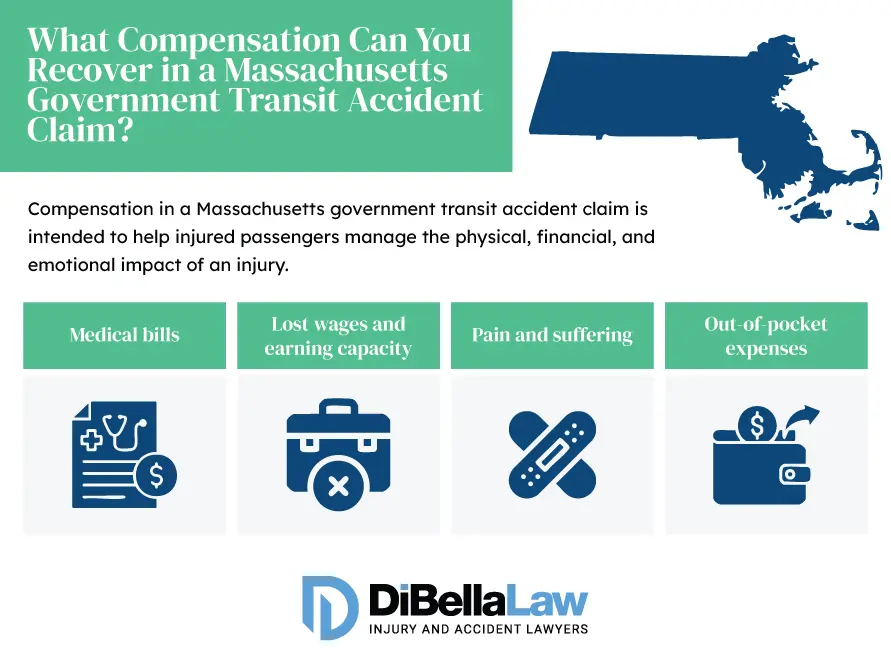
Compensation in a Massachusetts government transit accident claim is intended to help injured passengers manage the physical, financial, and emotional impact of an injury.
- Medical bills: Costs for emergency care, follow-up treatment, physical therapy, and future medical needs related to the injury.
- Lost wages and earning capacity: Income lost during recovery or reduced earning ability if injuries limit your ability to work.
- Pain and suffering: Physical pain, emotional distress, and loss of enjoyment of daily activities caused by the injury.
- Out-of-pocket expenses: Transportation to medical appointments or other costs tied directly to the accident.
Claims against government agencies may be subject to damage caps and special rules under the Massachusetts Tort Claims Act’s damage limits, which can affect the amount of compensation available. Because these restrictions are unique to government claims, working with an experienced government vehicle accident lawyer can help you understand how the rules apply to your situation.
What Is the Statute of Limitations for Government Injury Claims in Massachusetts?
Injuries involving public transportation in Massachusetts often carry stricter, more technical deadlines than those in standard personal injury cases.
Depending on the facts, your case may involve short notice requirements in specific situations, including laws that may require written notice within 30 days for injuries related to certain public way defects. It may also involve separate deadlines that apply to claims against government agencies, which can require a formal written presentation and other steps before a lawsuit can be filed.
Missing the correct deadline or sending notice to the wrong government entity can seriously limit or even eliminate your ability to recover compensation. Because these rules vary based on the agency involved and the cause of the injury, contacting a lawyer promptly can help protect your claim.
Get Help From Our Massachusetts Government Vehicle Accident Lawyer
An injury involving a government-owned bus, train, or public vehicle can quickly become overwhelming. These cases involve unique rules, strict deadlines, and government agencies that do not handle claims the same way private insurers do. Having the right legal guidance can make a significant difference in how smoothly the process proceeds.
DiBella Law Injury and Accident Lawyers helps clients navigate government claims by handling required notices, gathering evidence, and communicating with agencies and insurers, an approach clients value when facing complex government injury cases. If you were injured on public transportation, involved in a bus passenger injury, or hurt in a crash involving a government vehicle, DiBella Law can help you understand your options.
Get your free evaluation by calling 855-342-3552 (855-DiBella) or completing the online contact form to discuss your next steps.