


On This Page
- Fractures and Broken Bones After a Slip and Fall in Boston
- Sprains, Strains, and Soft-Tissue Damage After a Fall
- Concussions and Traumatic Brain Injuries From Slip and Falls
- Back and Spinal Cord Injuries After a Slip and Fall Accident
- Cuts, Bruises, and Minor Slip and Fall Injuries
- What Recovery Looks Like After a Slip and Fall Injury in Boston
- How Our Boston Lawyers Support Your Recovery From a Slip and Fall
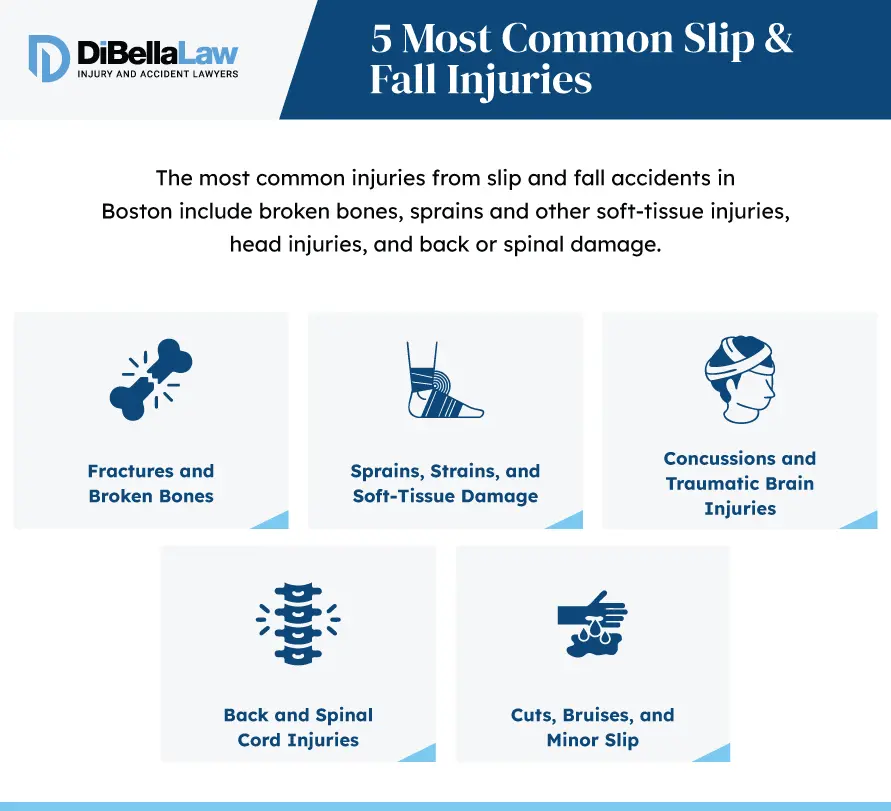
The most common injuries from slip and fall accidents in Boston include broken bones, sprains and other soft-tissue injuries, head injuries, and back or spinal damage. These accidents can be especially serious due to Boston’s uneven sidewalks, icy walkways, and poorly maintained properties. For older adults, falls are often traumatic and may cause severe injuries with long recovery times, such as hip fractures or herniated discs.
If you were injured in a fall in Boston, the slip and fall attorneys at DiBella Law Injury and Accident Lawyers can help you determine whether negligence caused your fall and recover the compensation you deserve. Our attorneys investigate the cause of your fall, identify negligent property conditions, and pursue compensation so you can focus on your recovery.
Fractures and Broken Bones After a Slip and Fall in Boston
Broken bones are one of the most common injuries resulting from a slip and fall, including broken or fractured wrists, arms, hips, and ankles. It’s natural to try to break a fall, but doing so often results in further injuries or hard landings, which can increase the risk of fractures, especially for older adults with weaker bones.
Some breaks can be treated with a cast. Surgery may also be required to repair a fracture, such as a hip fracture, which can result in a lengthy recovery time. Fractured and broken bones typically require immediate medical attention for diagnosis and treatment. Seeking medical care will also provide documentation of your fractures, which can be used as evidence to strengthen your claim.
Sprains, Strains, and Soft-Tissue Damage After a Fall
Sprains, strains, and other soft-tissue injuries often occur when a fall causes sudden twisting, overextension, or impact. Torn ligaments, strained muscles, and joint injuries can be extremely painful, even when there are no visible signs of injury. These injuries may also have delayed symptoms, making early treatment important because it can prevent your condition from worsening and provide strong medical evidence of your injuries.
Concussions and Traumatic Brain Injuries From Slip and Falls
You can hit your head on the ground or any nearby objects during a fall, causing head injuries, traumatic brain injuries (TBIs), skull fractures, and brain bleeding or swelling. If you hit your head at all during a fall, you should get medical treatment immediately.
TBIs may have mild or delayed symptoms initially, but left untreated, they could cause long-term damage. Common TBI symptoms after a fall may include headaches, dizziness, confusion, memory issues, or changes in mood. Because brain injuries can have lasting cognitive and neurological effects, they often lead to higher-value claims.
Back and Spinal Cord Injuries After a Slip and Fall Accident
Slip and fall accidents, especially when landing on your tailbone or twisting while trying to catch yourself, can cause back injuries and spinal cord damage. These injuries can include herniated discs, spinal fractures, and nerve damage.
Back and spinal cord injuries often require imaging studies, physical therapy, and ongoing medical care. Some injuries may cause long-term limitations or chronic pain. Thorough medical documentation helps demonstrate the full impact of these injuries over time.
Cuts, Bruises, and Minor Slip and Fall Injuries
The impact of a fall can lead to bruises and cuts from coming into contact with debris, sharp objects, or scraping against the concrete. While surface-level injuries may seem minor, they could require stitches, and severe bruising may indicate more serious health complications.
You should photograph your injuries, even minor ones like cuts and bruises, from a slip and fall. Be sure to document all injuries, including scratches, whether you’re filling out an accident report or seeking medical care.
What Recovery Looks Like After a Slip and Fall Injury in Boston
After a slip and fall in Massachusetts, you can protect your health and legal rights by seeking medical care as soon as possible, even if you don’t notice any visible injuries. You should not assume you’re uninjured or self-diagnose, as doing so risks worsening your injuries and could harm your claim.
After an initial appointment, you should follow your treatment plan, attend follow-up appointments, and remain consistent with your care. Consistent medical records are also essential for insurance claims, as insurers typically rely on documented diagnoses and treatment when evaluating compensation.
Documenting your injuries and symptoms through a journal or videos can also help strengthen your claim and improve your chances of recovering compensation, as it provides consistent documentation for how your injuries have affected your life.
How Our Boston Lawyers Support Your Recovery From a Slip and Fall
Property owners in Massachusetts have a legal duty to maintain their premises or warn you of hazards, such as ice or wet floors. Our team at DiBella Law will investigate whether property negligence or code violations caused your fall. You could be eligible for compensation if negligence contributed to your fall, which could cover medical bills, lost wages, pain and suffering, and future medical treatment.
Our Boston slip and fall attorneys will investigate your fall and handle all communications with insurers. We will treat your case with personalized attention, negotiate fiercely on your behalf, and, if a fair settlement isn’t offered, be ready to take your case to court.
The Boston slip and fall lawyers at DiBella Law provide free consultations to help you understand your options. Contact us today for a free evaluation or call (855) 342-3552 (855-DiBella).